
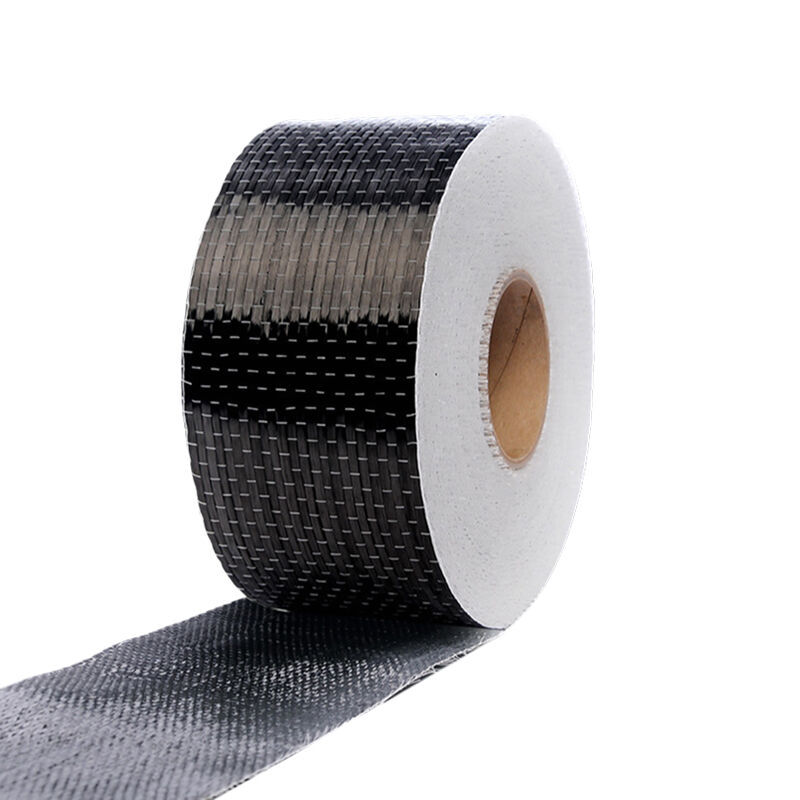
Carbon fiber is one of the most advanced and versatile materials used in modern manufacturing, with applications ranging from aerospace to automotive, and even in everyday consumer products like bicycles and sporting equipment. Known for its impressive strength-to-weight ratio, carbon fiber adhesive is a material that has revolutionized industries, but its exceptional properties are the result of a complex manufacturing process and an understanding of its underlying science.
What Is Carbon Fiber?
At its core, carbon fiber is a polymer that is made up of long chains of carbon atoms bonded together in a crystalline structure. The material is often referred to as "graphite fiber" because it is composed mainly of carbon atoms arranged in a pattern that resembles graphite. The fibers themselves are thin—often thinner than a human hair—and are typically woven together into sheets or fabric-like structures. When combined with a polymer matrix, such as epoxy, carbon fiber can be used to create extremely strong, lightweight composite materials.
How Is Carbon Fiber Made?
The process of making carbon fiber is multi-step and involves the conversion of precursor materials, typically polyacrylonitrile (PAN), into the final carbon fiber product. Here’s a basic rundown of the steps involved in its production:
-
Precursor Production: The starting point for carbon fiber is usually a polymer called polyacrylonitrile (PAN). PAN is chosen because of its ability to form a high amount of carbon when it is processed. Other precursors like rayon or pitch can also be used, but PAN remains the most common.
-
Stabilization: The PAN fibers are first stretched and heated in an oxygen-rich environment to stabilize the fiber. During this phase, the polymer is chemically modified to prevent it from melting during the next steps.
-
Carbonization: After stabilization, the PAN fibers are heated in an inert atmosphere, such as nitrogen, at temperatures between 1,000 and 3,000 degrees Celsius. This process, called carbonization, removes the non-carbon atoms (such as hydrogen, oxygen, and nitrogen), leaving behind a structure composed almost entirely of carbon. The fiber becomes blackened and dense, giving it its characteristic strength and stiffness.
-
Surface Treatment: After carbonization, the fibers are treated to improve their bonding capabilities with resins. This is achieved through chemical treatments or applying coatings that allow the fiber to adhere more effectively to the resin matrix.
-
Weaving and Manufacturing: Finally, the carbon fibers are woven into cloth-like materials or bundled into yarns and strands, which are then used in a variety of manufacturing processes like molding, weaving, or filament winding. These woven fibers are often layered with epoxy or another resin to form composite materials that are both strong and lightweight.
Why Is Carbon Fiber So Strong?
The strength of carbon fiber lies in its atomic structure. The carbon atoms in carbon fiber are arranged in a crystalline structure that forms long, continuous chains. These chains are aligned along the length of the fiber, which maximizes the strength along that axis. The molecular bonds between the carbon atoms are exceptionally strong, and this gives the material its high tensile strength—the ability to resist breaking under tension.
Additionally, carbon fiber’s lightness contributes to its strength-to-weight ratio. The fibers themselves are incredibly thin, but because they are woven or bundled together in large numbers, they create a material that can withstand immense forces without adding much weight. This unique combination of strength and lightness is why carbon fiber is highly sought after for applications where both performance and weight reduction are critical, such as in aircraft and high-performance sports cars.
Conclusion
The science behind carbon fiber is a testament to the power of material science and engineering. Through the careful control of the chemical and physical processes that form carbon fibers, scientists and engineers have been able to create a material that is not only extraordinarily strong but also incredibly light. Whether in the aviation industry, automotive manufacturing, or even in sports equipment, carbon fiber continues to play a crucial role in advancing technology and improving performance across multiple sectors. Its strength, combined with its low weight, makes it a material that is likely to be indispensable in the future of manufacturing and engineering.
